Image Restoration
CMSC 178IP - Module 05
Noel Jeffrey Pinton
Department of Computer Science
University of the Philippines Cebu
Image Restoration
CMSC 178IP - Module 05
Noel Jeffrey Pinton
Department of Computer Science
University of the Philippines Cebu
Learning Objectives
By the end of this module, you will be able to:
- Understand the image degradation model
- Characterize point spread functions (PSF)
- Apply inverse and Wiener filtering
- Implement iterative restoration methods
- Evaluate restoration quality using metrics
Degradation Model
Understanding how images become degraded
Image Degradation Model
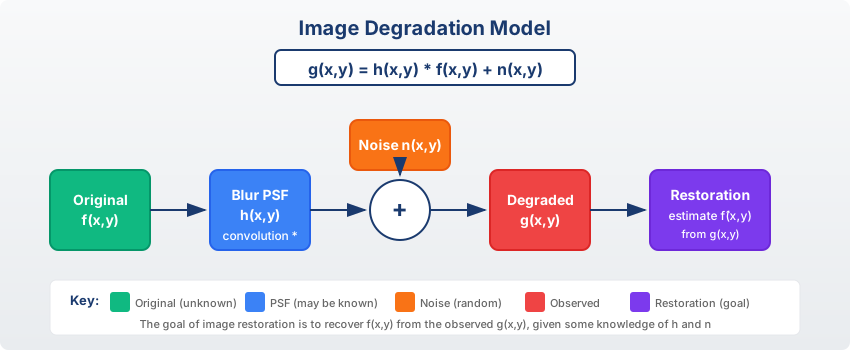
$$g(x,y) = h(x,y) * f(x,y) + n(x,y)$$
g = degraded image, h = PSF, f = original, n = noise
Noise Models
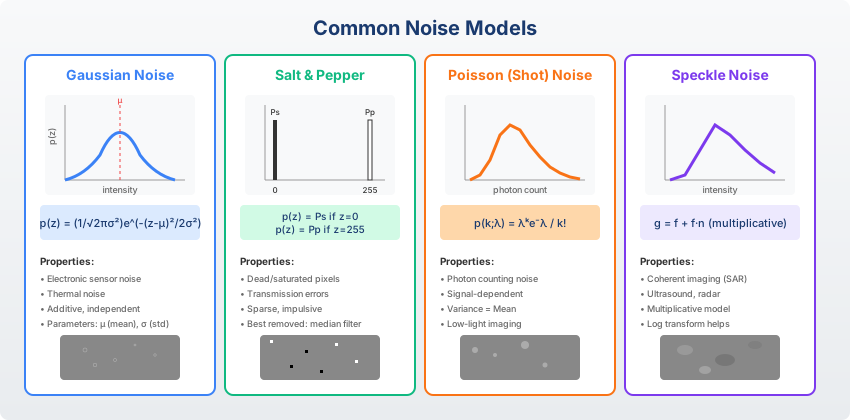
Common noise distributions: Gaussian, Poisson, salt & pepper
Point Spread Function (PSF)
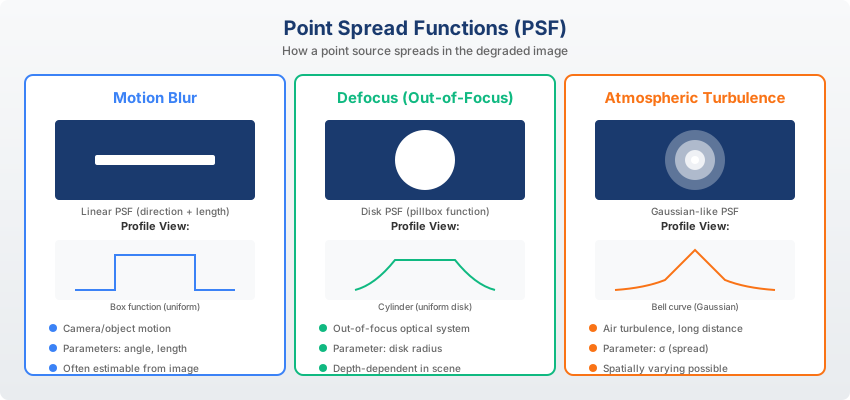
PSF: The impulse response of the imaging system - how a point source is blurred.
- Motion blur: Linear PSF in direction of motion
- Out-of-focus: Circular (pillbox) PSF
- Atmospheric: Gaussian-like PSF
Knowledge Check
Think About It
Why is knowing the PSF important for image restoration?
Click the blurred area to reveal the answer
Restoration Methods
Recovering the original image
Spatial Filtering for Restoration
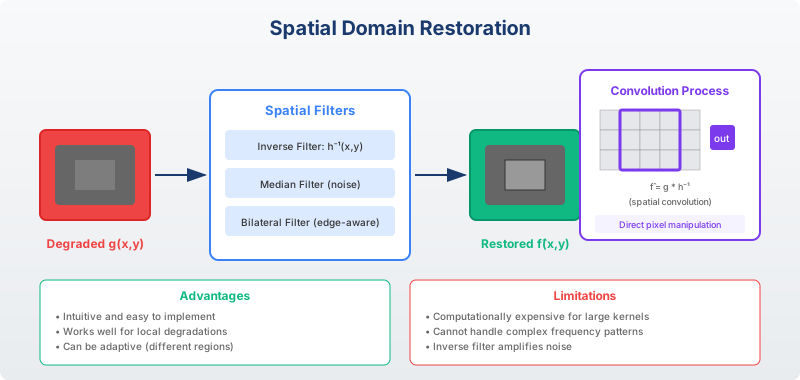
Simple spatial filters can reduce some types of degradation
Frequency Domain Restoration
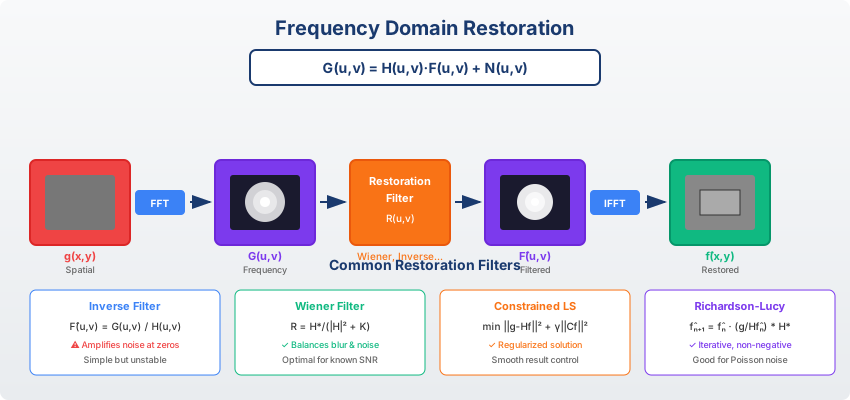
$$\hat{F}(u,v) = \frac{G(u,v)}{H(u,v)}$$
Problem: Amplifies noise where H(u,v) is small!
Wiener Filter
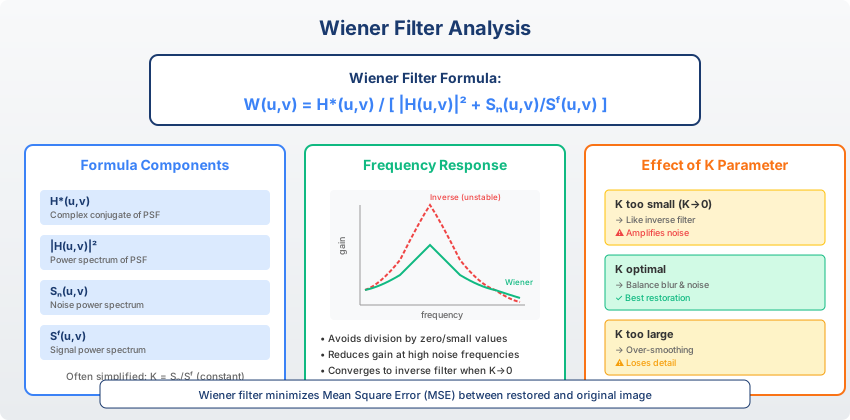
$$\hat{F}(u,v) = \frac{H^*(u,v)}{|H(u,v)|^2 + \frac{S_n}{S_f}} \cdot G(u,v)$$
Balances deconvolution against noise amplification
Knowledge Check
Think About It
What advantage does the Wiener filter have over simple inverse filtering?
Click the blurred area to reveal the answer
Motion Blur Restoration
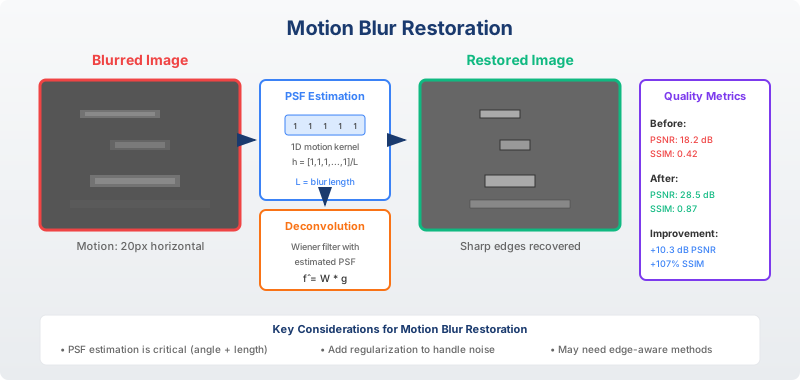
Restoring images degraded by camera or object motion
Iterative Methods
Richardson-Lucy and other iterative approaches
Richardson-Lucy Algorithm
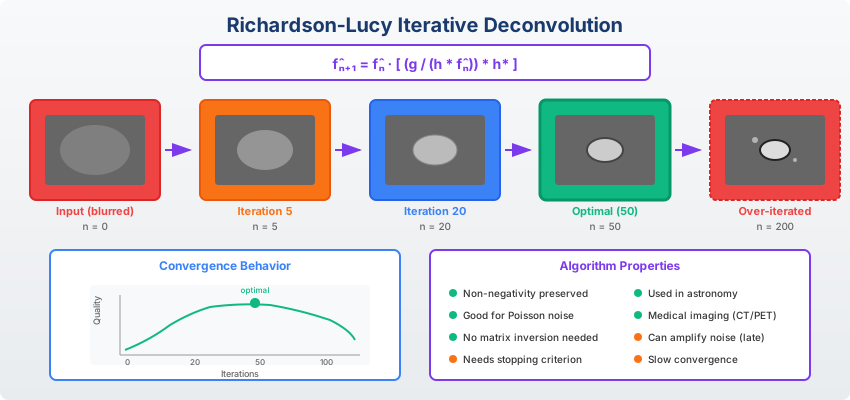
Richardson-Lucy: Iterative ML estimation for Poisson noise.
$$f^{(k+1)} = f^{(k)} \cdot \left( h(-x,-y) * \frac{g}{h * f^{(k)}} \right)$$
Converges to maximum likelihood solution; good for astronomical images.
Restoration Comparison
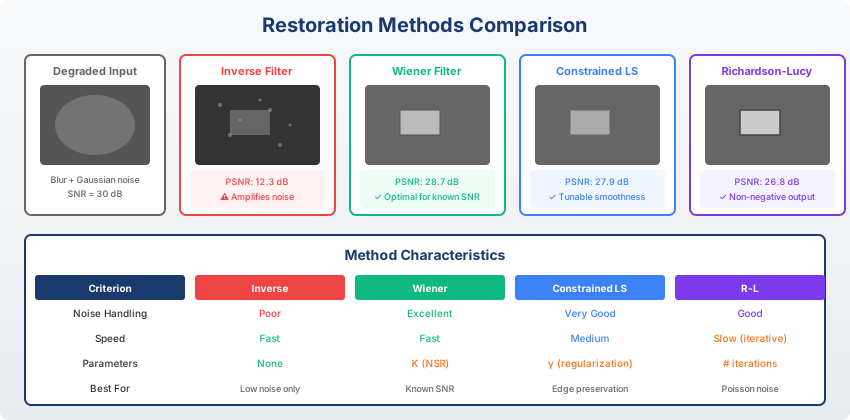
Comparing different restoration methods on the same degraded image
Quality Metrics
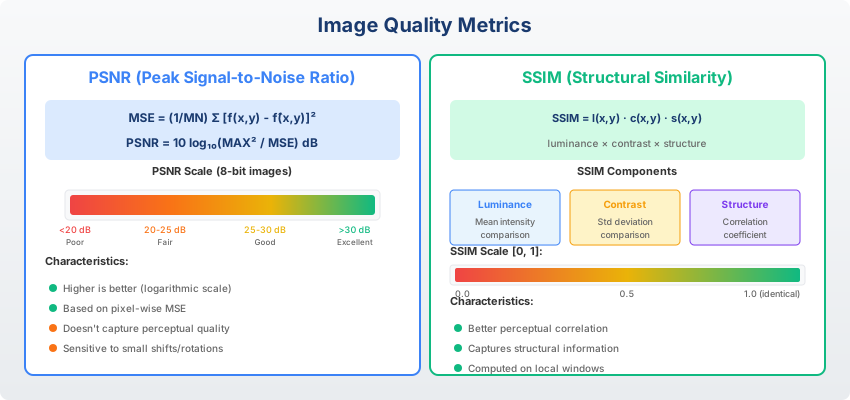
$$PSNR = 10\log_{10}\frac{MAX^2}{MSE}$$
Structural similarity considering luminance, contrast, structure
Applications
Real-world restoration applications
Medical Image Restoration
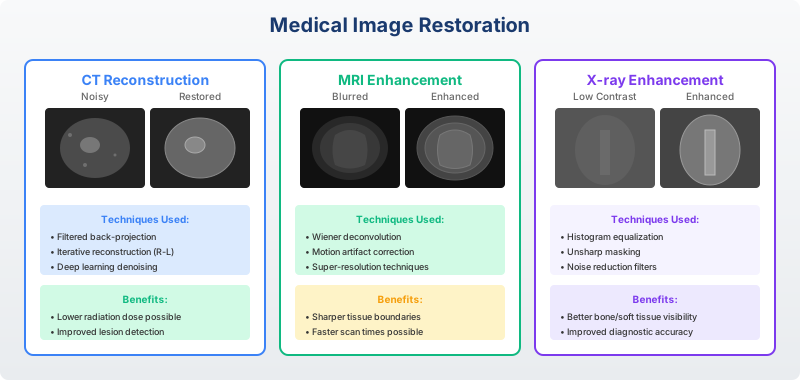
Enhancing CT, MRI, and X-ray images for better diagnosis
Document Processing
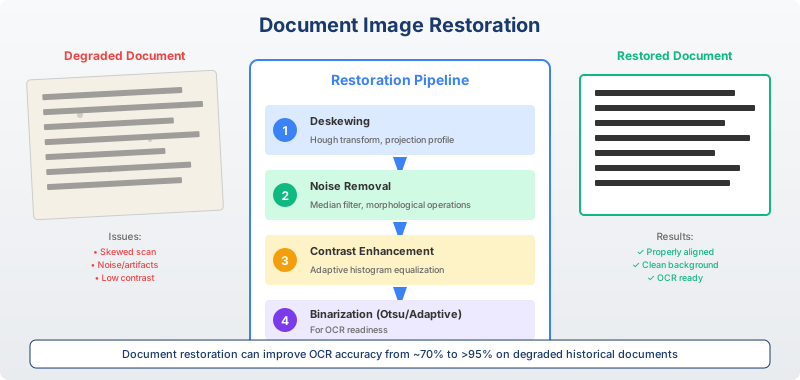
Restoring degraded historical documents and improving OCR accuracy
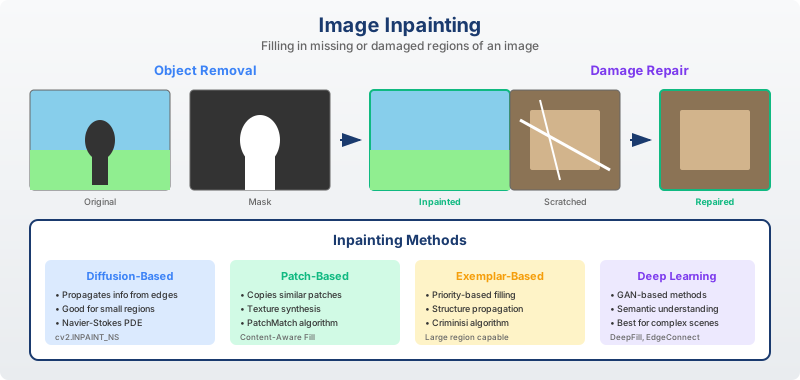
Image Inpainting
Summary
Key Takeaways
Key Takeaways
- Degradation model: g = h*f + n (blur + noise)
- PSF: Characterizes the blur - motion, defocus, atmospheric
- Inverse filter: Simple but amplifies noise
- Wiener filter: Optimal linear filter balancing deconvolution and noise
- Richardson-Lucy: Iterative method for Poisson noise
- Quality metrics: PSNR and SSIM for objective evaluation
Questions?
Thank you for your attention!
Next: Module 06 - Geometric Transformations
End of Module 05
Image Restoration
Questions?