Feature Extraction
CMSC 178IP - Module 07
Noel Jeffrey Pinton
Department of Computer Science
University of the Philippines Cebu
Feature Extraction
CMSC 178IP - Module 07
Noel Jeffrey Pinton
Department of Computer Science
University of the Philippines Cebu
Learning Objectives
By the end of this module, you will be able to:
- Detect edges using gradient-based methods
- Find corners and interest points
- Apply the Hough transform for line/circle detection
- Understand feature descriptors (SIFT, ORB)
- Perform feature matching between images
Edge Detection
Finding boundaries in images
Gradient Operators
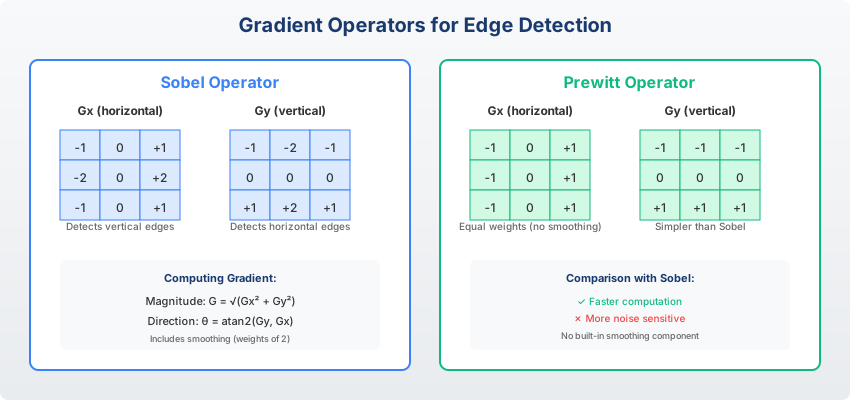
[[-1,0,1],
 [-2,0,2],
[-1,0,1]][[-1,0,1],
[-1,0,1],
[-1,0,1]]Edge Detection Comparison
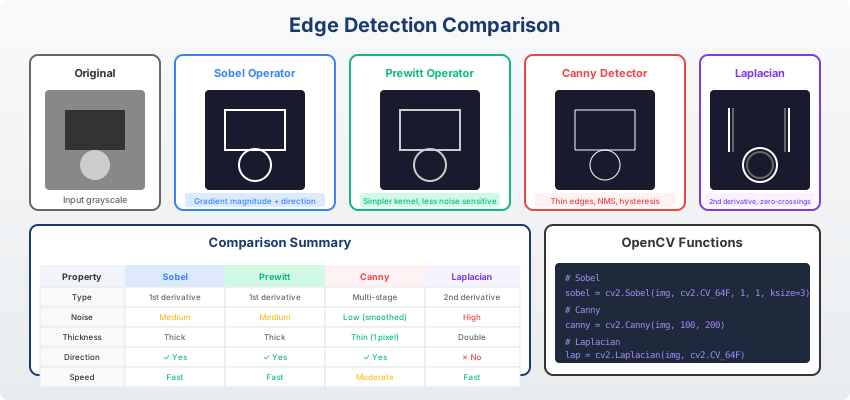
Sobel, Prewitt, Roberts, and Canny edge detectors
Canny Edge Detector
Canny Edge Detection - The "optimal" edge detector:
- Gaussian smoothing - Reduce noise
- Gradient computation - Find edge strength and direction
- Non-maximum suppression - Thin edges to 1 pixel
- Hysteresis thresholding - Connect strong and weak edges
Knowledge Check
Think About It
What is the purpose of non-maximum suppression in Canny edge detection?
Click the blurred area to reveal the answer
Corner Detection
Interest points for matching
Harris Corner Detection
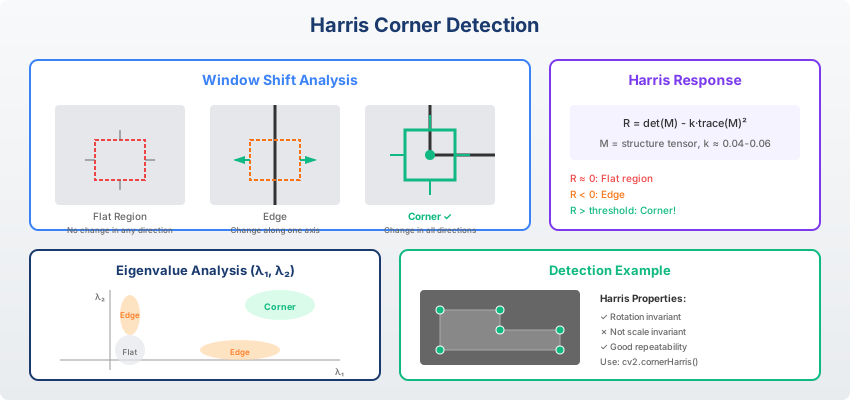
Harris Corner Response:
$$R = \det(M) - k \cdot \text{trace}(M)^2$$
where M is the structure tensor. R > 0 indicates a corner.
What Makes a Good Feature?
Good features are:
- Repeatable - Found in both images
- Distinctive - Unique in neighborhood
- Localized - Precise position
- Efficient - Fast to compute
No change in any direction
❌ Bad feature
Change in all directions
✓ Good feature
Hough Transform
Detecting lines and shapes
Hough Transform
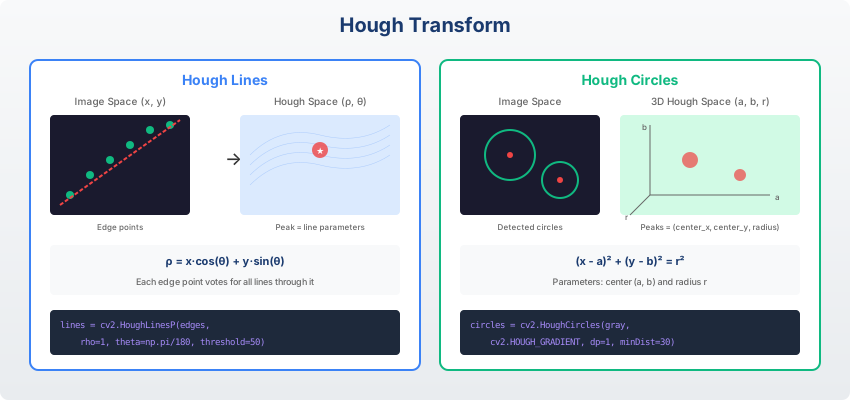
Hough Transform: Convert from image space to parameter space.
$$\rho = x \cos\theta + y \sin\theta$$
Each edge point votes for all lines passing through it. Peaks indicate detected lines.
Knowledge Check
Think About It
How does the Hough transform detect lines even with gaps or noise?
Click the blurred area to reveal the answer
Feature Descriptors
Describing local image regions
SIFT Features
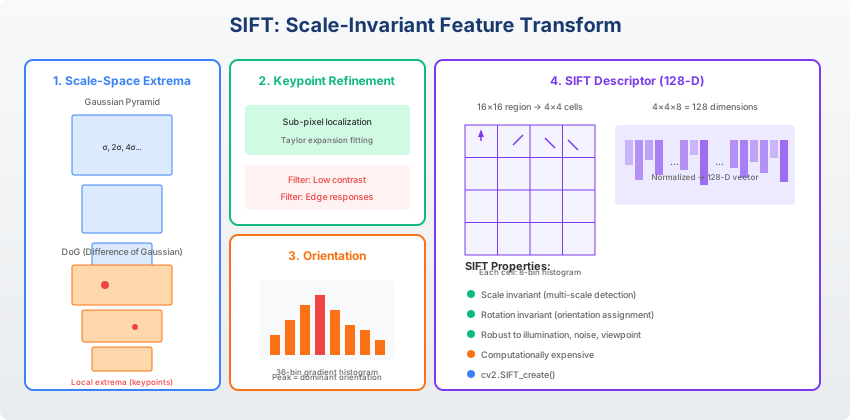
SIFT (Scale-Invariant Feature Transform):
- Scale-space extrema detection
- Keypoint localization
- Orientation assignment
- 128-dimensional descriptor
Robust to scale, rotation, and illumination changes.
ORB Features
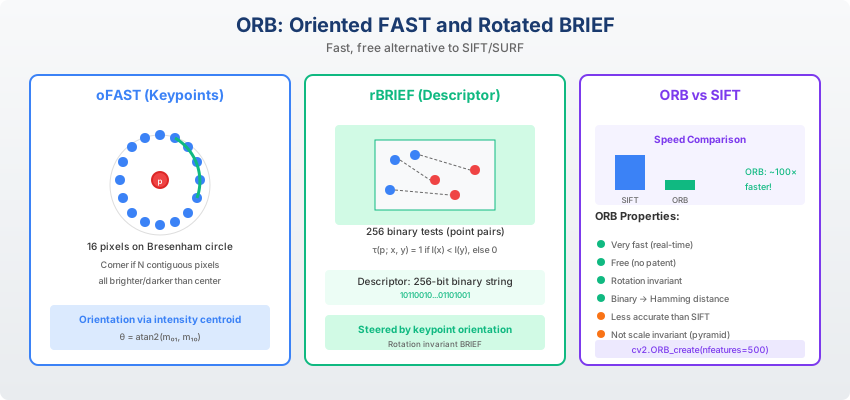
- Fast keypoint detection (FAST)
- Binary descriptor (BRIEF)
- Rotation invariant
- Free alternative to SIFT
- Much faster than SIFT
HOG Features
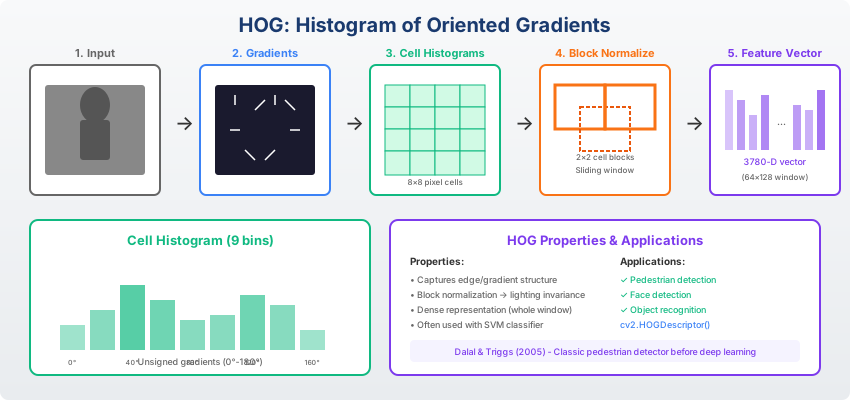
HOG (Histogram of Oriented Gradients):
Captures edge direction distribution in cells. Excellent for pedestrian detection and object recognition.
Texture Features
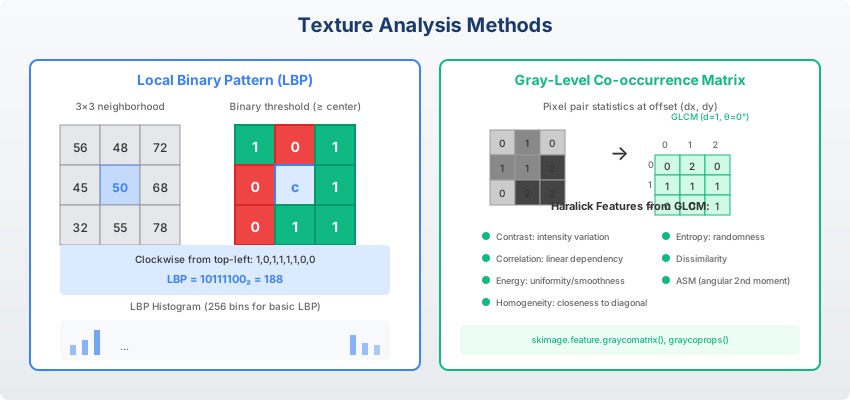
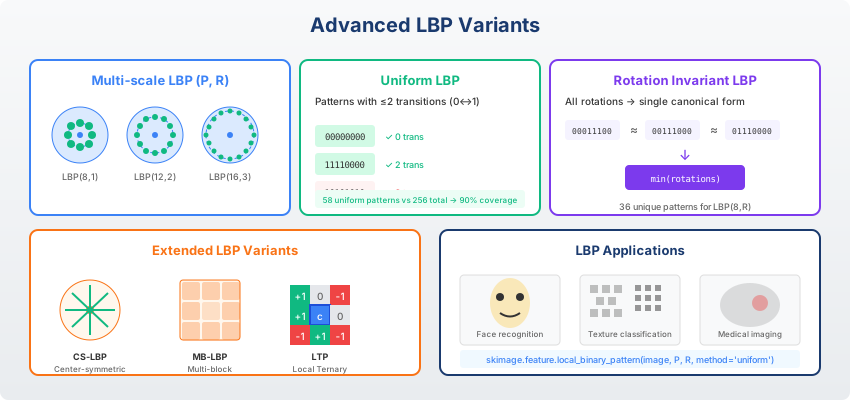
LBP and other texture descriptors capture local patterns
Advanced LBP
Feature Matching
Finding correspondences between images
Feature Matching
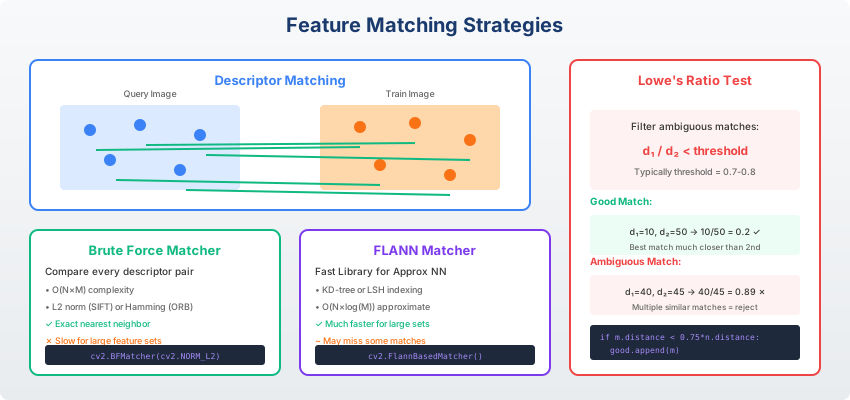
- Brute-force: Compare all pairs
- FLANN: Fast approximate matching
- Ratio test: Reject ambiguous matches
Knowledge Check
Think About It
What is Lowe's ratio test and why is it effective?
Click the blurred area to reveal the answer
Line Feature Matching
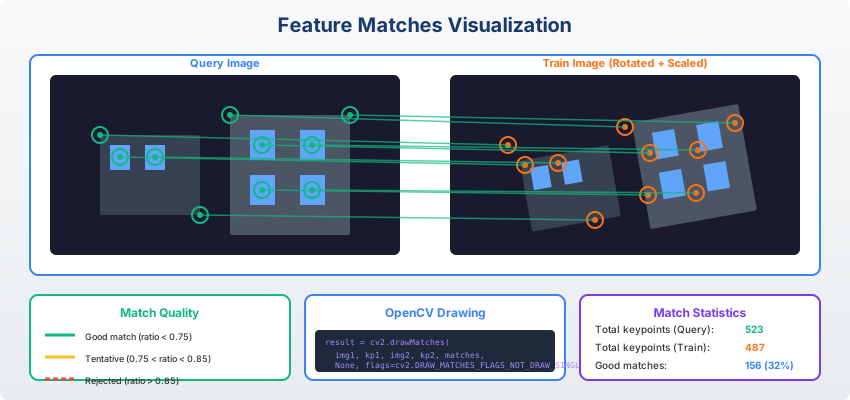
Matched features showing correspondence between two views
Bag of Features
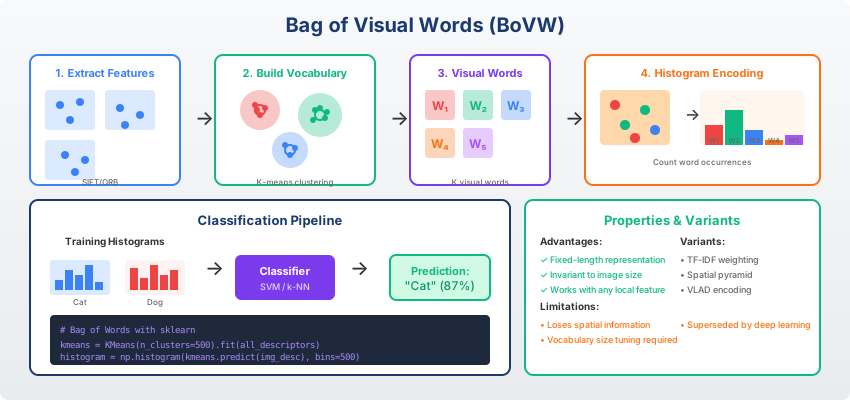
Bag of Visual Words:
- Extract features from training images
- Cluster into visual vocabulary
- Represent images as histograms of visual words
- Use for image classification/retrieval
Applications
Real-world feature extraction applications
Medical Imaging
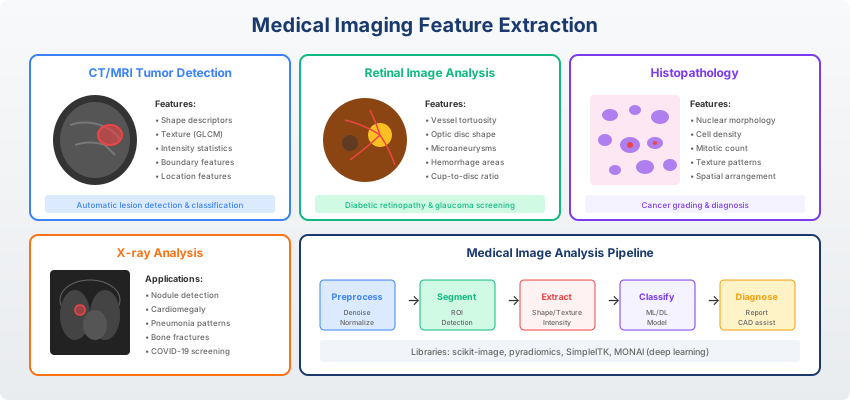
Feature extraction for tumor detection and tissue analysis
Document Analysis
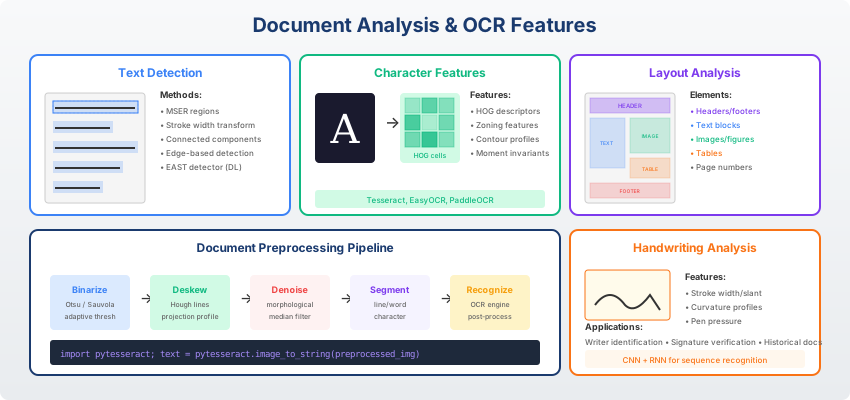
OCR preprocessing and layout analysis using edge and corner detection
Biometric Analysis
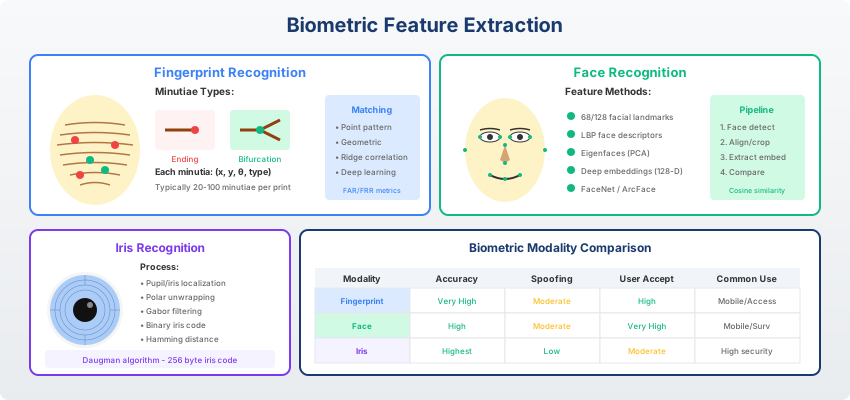
Fingerprint and face feature extraction for identification
Industrial Inspection
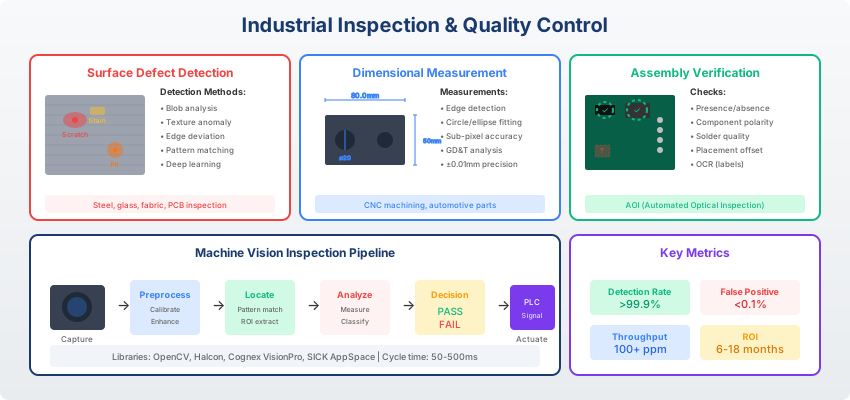
Defect detection in manufacturing using feature analysis
Autonomous Vehicles
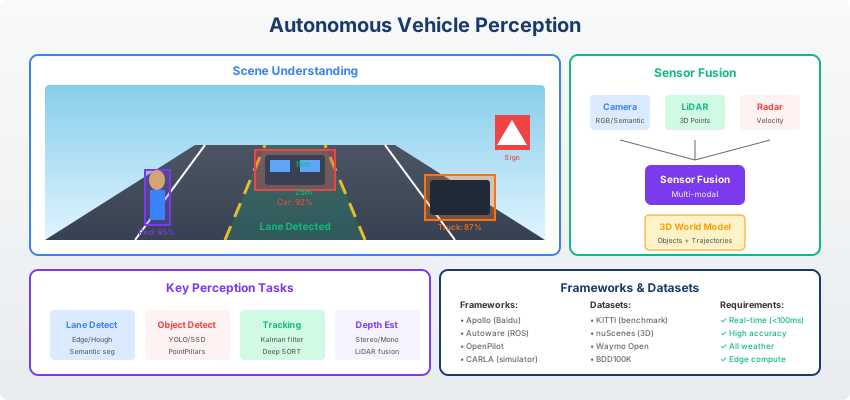
Lane detection, obstacle recognition, and scene understanding
Implementation
import cv2
import numpy as np

img = cv2.imread('image.jpg', 0)

# Canny edge detection
edges = cv2.Canny(img, 100, 200)

# Harris corners
corners = cv2.cornerHarris(img, 2, 3, 0.04)

# ORB features
orb = cv2.ORB_create()
keypoints, descriptors = orb.detectAndCompute(img, None)

# Feature matching
bf = cv2.BFMatcher(cv2.NORM_HAMMING, crossCheck=True)
matches = bf.match(desc1, desc2)
Summary
Key Takeaways
Key Takeaways
- Edge detection: Sobel, Canny - find boundaries
- Corner detection: Harris - find interest points
- Hough transform: Detect lines and shapes in parameter space
- SIFT/ORB: Scale and rotation invariant descriptors
- HOG/LBP: Gradient and texture features
- Feature matching: Brute-force, FLANN, ratio test
Questions?
Thank you for your attention!
Next: Module 08 - Segmentation and Morphology
End of Module 07
Feature Extraction
Questions?