Computer Vision & Deep Learning I
CMSC 178IP - Module 09
Noel Jeffrey Pinton
Department of Computer Science
University of the Philippines Cebu
Computer Vision & Deep Learning I
CMSC 178IP - Module 09
Noel Jeffrey Pinton
Department of Computer Science
University of the Philippines Cebu
Learning Objectives
By the end of this module, you will be able to:
- Understand neural network fundamentals (perceptron, MLP)
- Explain activation functions and their purposes
- Describe gradient descent and backpropagation
- Understand CNN architecture (convolution, pooling)
- Prepare data for deep learning models
Neural Network Basics
From perceptron to deep networks
The Perceptron
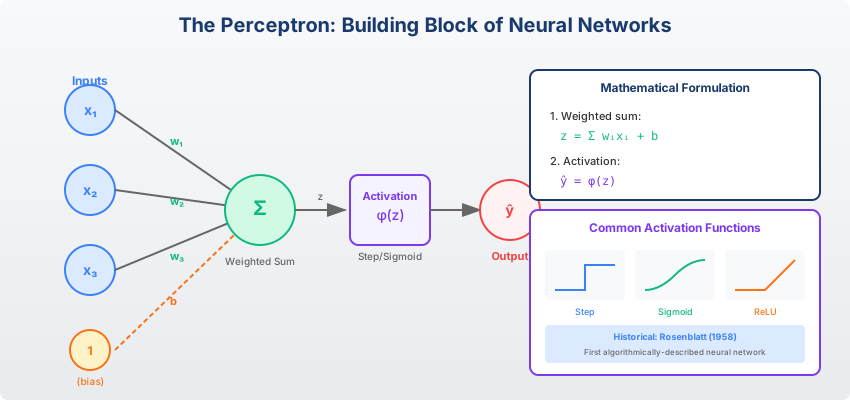
Perceptron:
$$y = \sigma\left(\sum_{i=1}^{n} w_i x_i + b\right)$$
Weighted sum of inputs + bias, passed through activation function
Activation Functions
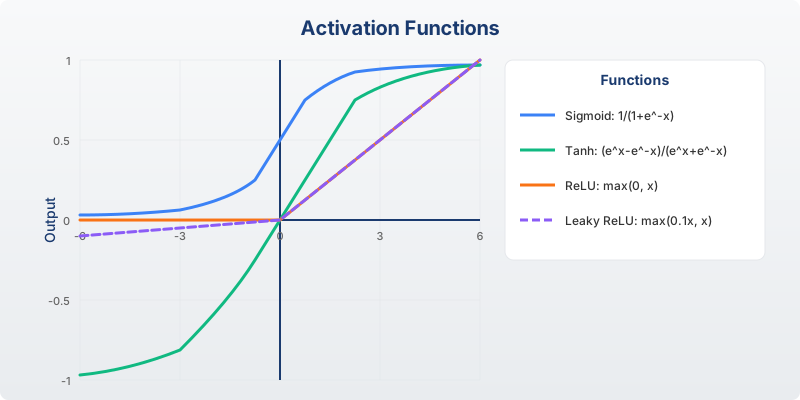
$$\sigma(x) = \frac{1}{1+e^{-x}}$$
$$f(x) = \max(0, x)$$
Knowledge Check
Think About It
Why is ReLU preferred over sigmoid in deep networks?
Click the blurred area to reveal the answer
Multi-Layer Perceptron
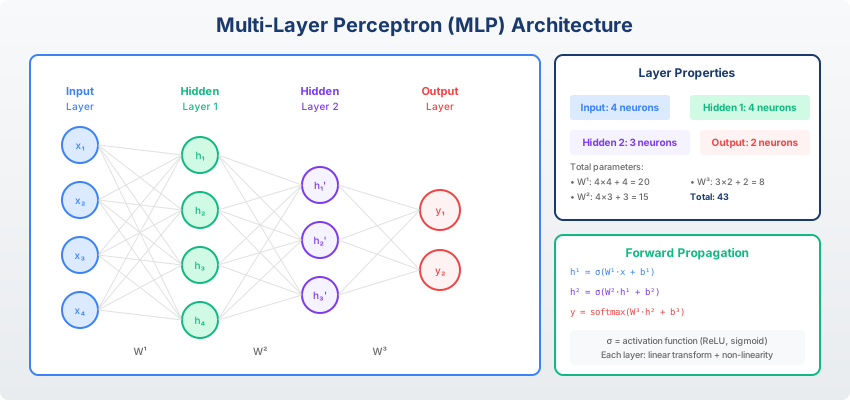
MLP: Multiple layers of neurons connected in sequence.
- Input layer: Receives data
- Hidden layers: Learn representations
- Output layer: Produces predictions
Training Neural Networks
Learning from data
Loss Functions
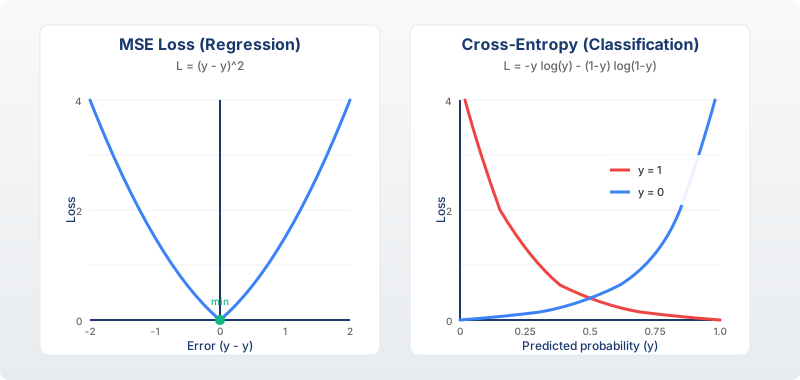
$$L = \frac{1}{n}\sum(y - \hat{y})^2$$
$$L = -\sum y \log(\hat{y})$$
Gradient Descent
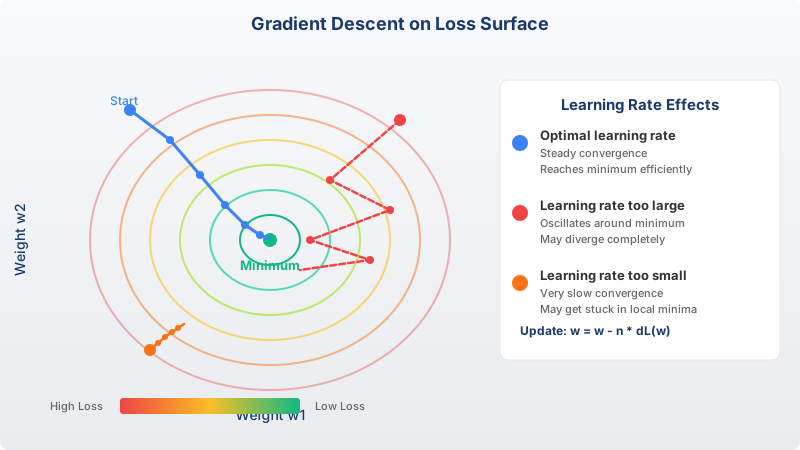
Parameter Update:
$$w = w - \eta \frac{\partial L}{\partial w}$$
η = learning rate. Move in direction that reduces loss.
Knowledge Check
Think About It
What happens if the learning rate is too large or too small?
Click the blurred area to reveal the answer
Learning Curves
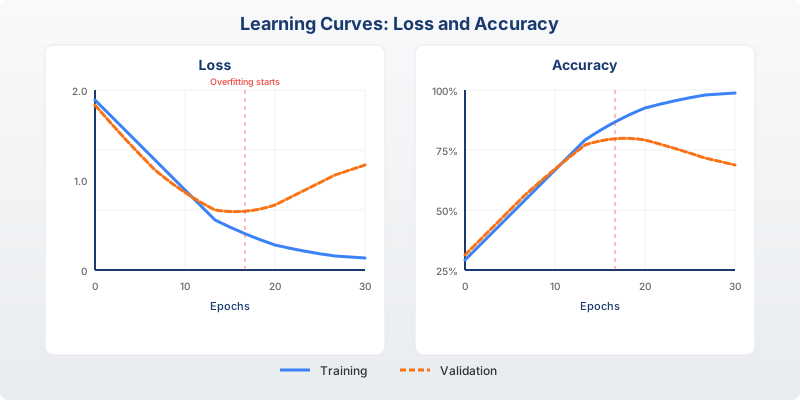
Overfitting
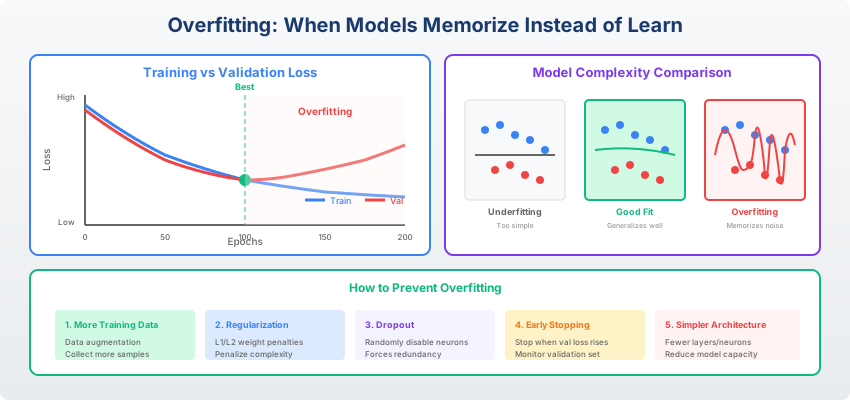
Overfitting: Model memorizes training data but fails on new data.
Solutions: Regularization (L1/L2), dropout, early stopping, data augmentation, more data.
Convolutional Neural Networks
Designed for image data
Convolution Operation
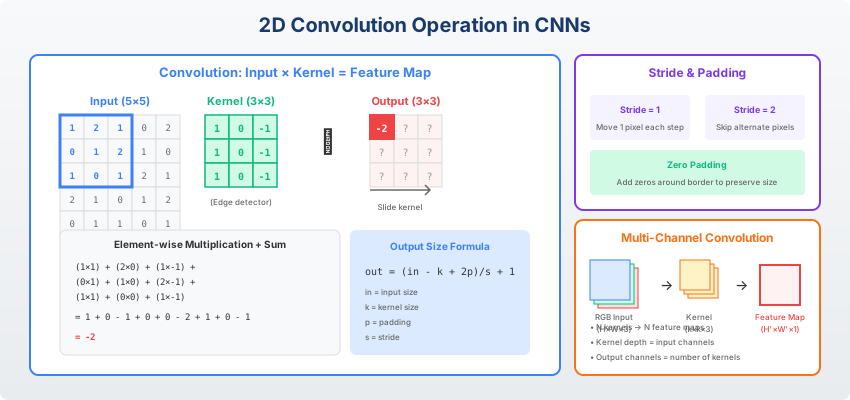
Pooling Operations
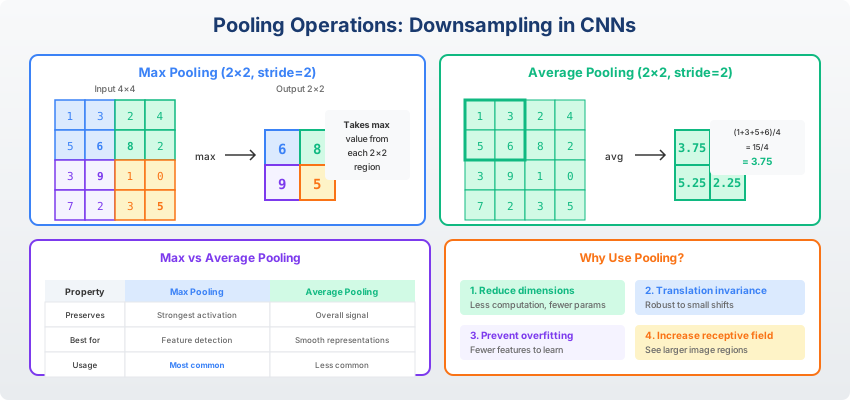
Takes maximum value in window
Preserves strongest features
Takes average value in window
Smoother downsampling
Knowledge Check
Think About It
What are the benefits of pooling layers?
Click the blurred area to reveal the answer
CNN Architecture
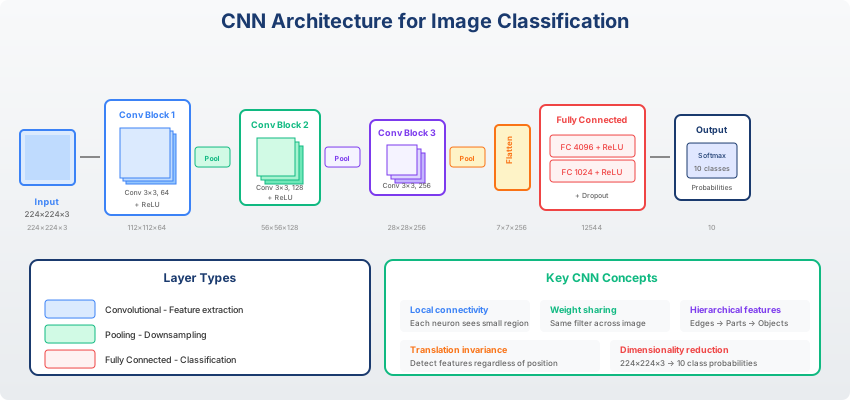
Typical CNN:
Input → [Conv → ReLU → Pool] × N → Flatten → FC → Output
Early layers: edges, textures. Deeper layers: complex patterns, objects.
Feature Maps

Data Preparation
Getting your data ready
Preprocessing Pipeline
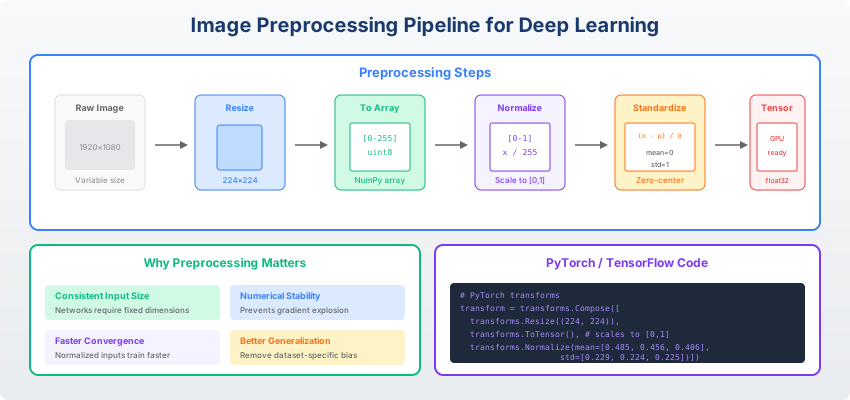
Essential steps:
- Resize to consistent dimensions
- Normalize pixel values (0-1 or -1 to 1)
- Split: train/validation/test sets
- Batch loading for memory efficiency
Data Augmentation
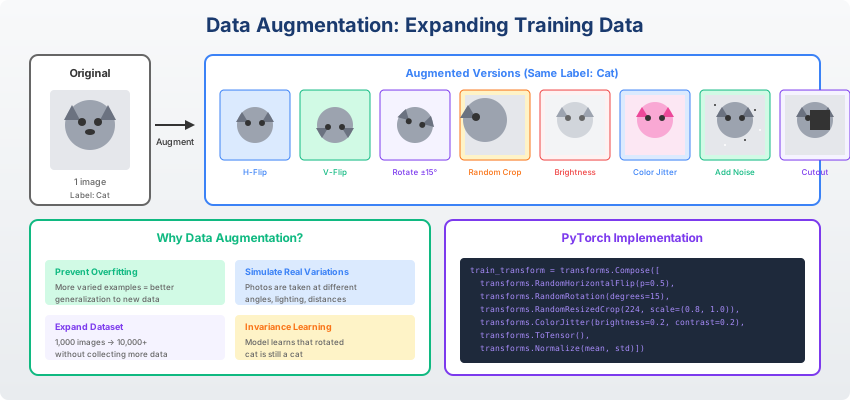
Augmentation: Artificially expand training set by applying transformations.
- Rotation, flipping, cropping
- Brightness, contrast adjustments
- Scaling, shearing
- Random erasing, cutout
Classification Example
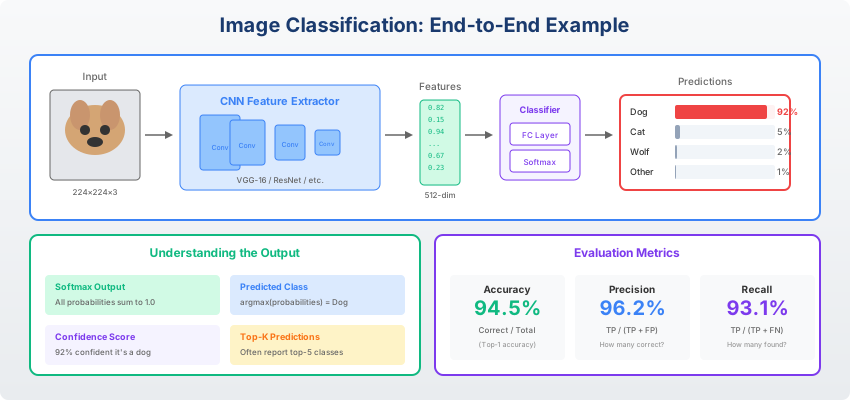
End-to-end image classification with a CNN
Confusion Matrix
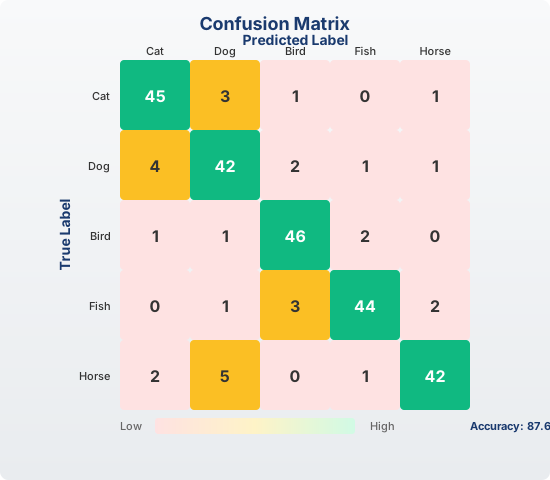
Implementation
import torch
import torch.nn as nn

class SimpleCNN(nn.Module):
    def __init__(self, num_classes=10):
        super().__init__()
        self.features = nn.Sequential(
            nn.Conv2d(3, 32, kernel_size=3, padding=1),
            nn.ReLU(),
            nn.MaxPool2d(2, 2),
            nn.Conv2d(32, 64, kernel_size=3, padding=1),
            nn.ReLU(),
            nn.MaxPool2d(2, 2)
        )
        self.classifier = nn.Sequential(
            nn.Flatten(),
            nn.Linear(64 * 8 * 8, 128),
            nn.ReLU(),
            nn.Linear(128, num_classes)
        )
Summary
Key Takeaways
Key Takeaways
- Perceptron: Basic unit - weighted sum + activation
- Activation functions: ReLU (most common), sigmoid, softmax
- Training: Minimize loss using gradient descent
- CNN: Convolution + pooling for spatial features
- Overfitting: Combat with regularization, dropout, augmentation
- Data prep: Normalize, augment, split properly
Questions?
Thank you for your attention!
Next: Module 10 - Computer Vision & Deep Learning II
End of Module 09
Computer Vision & Deep Learning I
Questions?