Computer Vision & Deep Learning II
CMSC 178IP - Module 10
Noel Jeffrey Pinton
Department of Computer Science
University of the Philippines Cebu
Computer Vision & Deep Learning II
CMSC 178IP - Module 10
Noel Jeffrey Pinton
Department of Computer Science
University of the Philippines Cebu
Learning Objectives
By the end of this module, you will be able to:
- Build image classification systems
- Understand object detection architectures (YOLO, Faster R-CNN)
- Implement semantic segmentation with U-Net
- Evaluate models using IoU, mAP, and other metrics
- Apply transfer learning for computer vision tasks
Image Classification
Assigning labels to images
MNIST Dataset
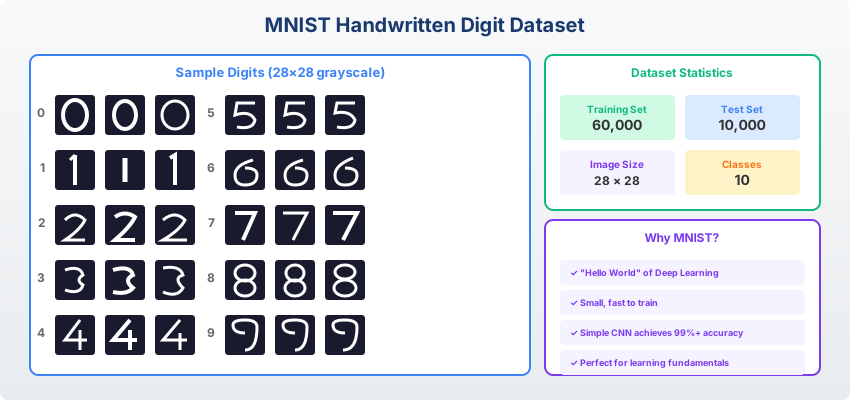
MNIST: 70,000 handwritten digits (28×28 grayscale). The "Hello World" of deep learning.
CIFAR-10 Dataset
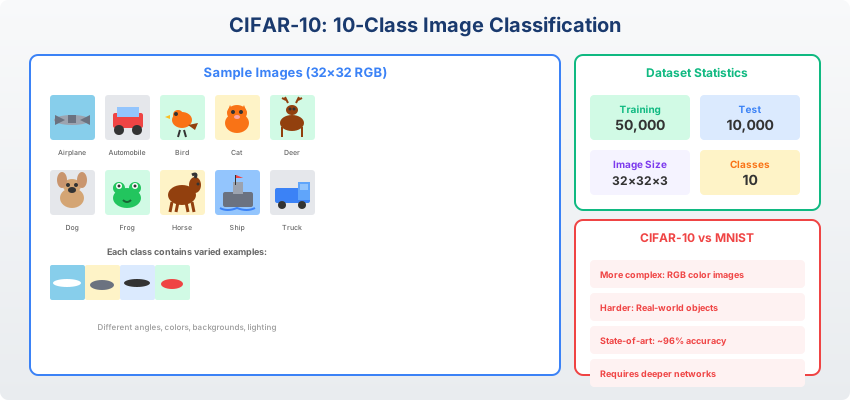
CIFAR-10: 60,000 color images (32×32) in 10 classes. More challenging than MNIST.
CNN for Classification
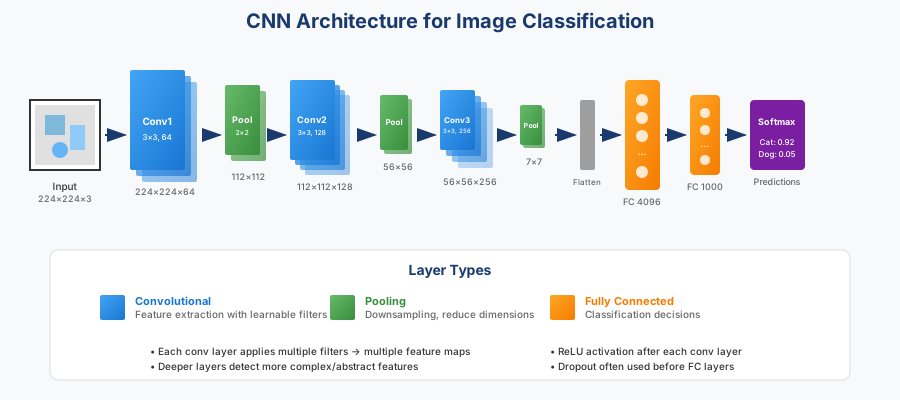
Conv layers → Feature extraction
FC layers → Classification
Softmax → Probability distribution over classes
Feature Maps Visualization
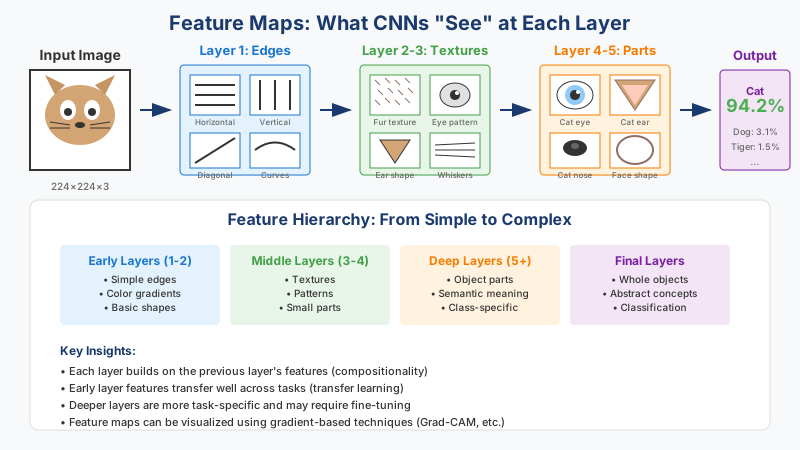
What the CNN learns at different layers
Training and Evaluation
Confusion Matrix
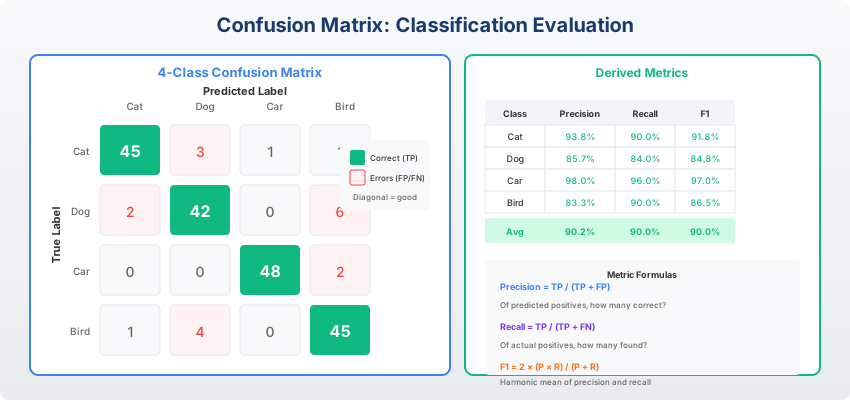
Metrics from confusion matrix:
- Precision = TP / (TP + FP)
- Recall = TP / (TP + FN)
- F1 = 2 × (Precision × Recall) / (Precision + Recall)
Multiclass Predictions
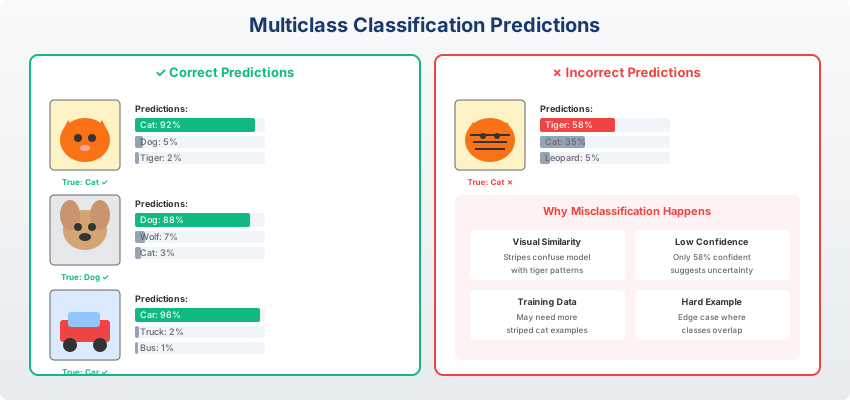
Sample predictions showing correct classifications and errors
Object Detection
Finding and localizing objects
Object Detection Task
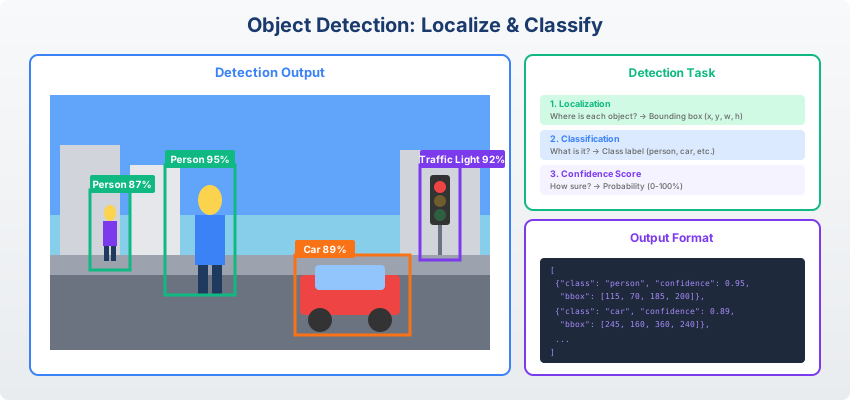
Object Detection: Not just "what" but "where".
Output: Class label + Bounding box (x, y, width, height)
YOLO Architecture
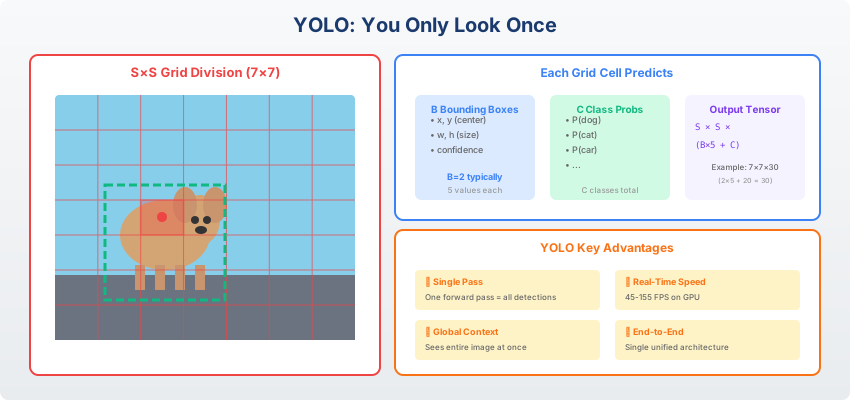
YOLO (You Only Look Once):
- Single-shot detector - very fast
- Divides image into grid cells
- Each cell predicts B boxes + class probabilities
- Real-time detection possible
Knowledge Check
Think About It
Why is YOLO faster than two-stage detectors like Faster R-CNN?
Click the blurred area to reveal the answer
Faster R-CNN
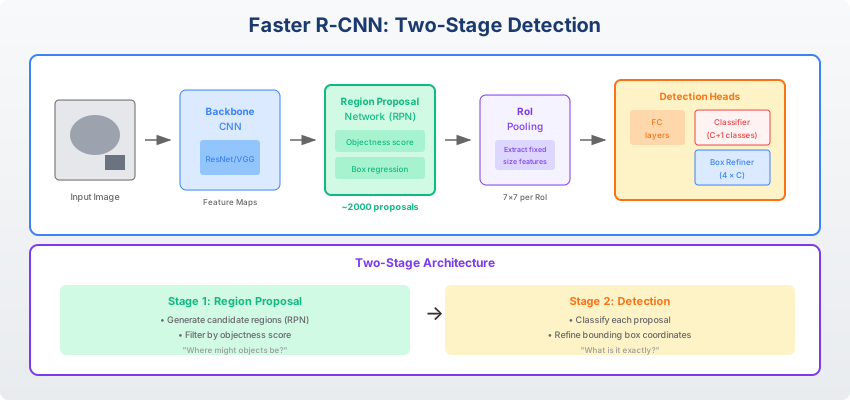
- Region Proposal Network (RPN): Generate candidate boxes
- Classification head: Classify and refine boxes
More accurate but slower than YOLO.
IoU (Intersection over Union)
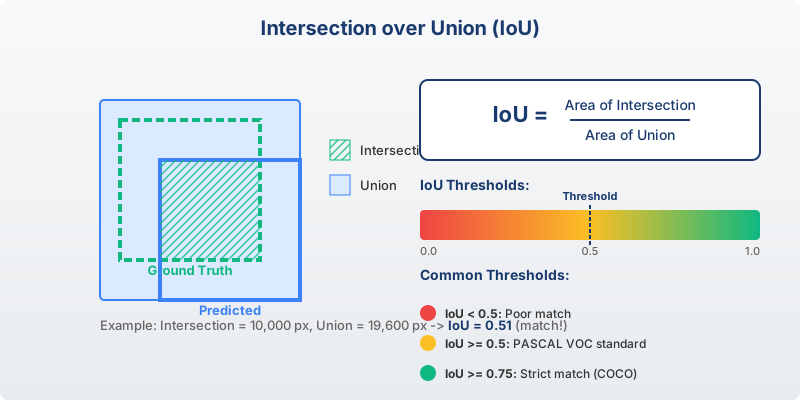
IoU: Measures overlap between predicted and ground truth boxes.
$$IoU = \frac{\text{Area of Intersection}}{\text{Area of Union}}$$
IoU > 0.5 typically considered a "correct" detection.
Non-Maximum Suppression
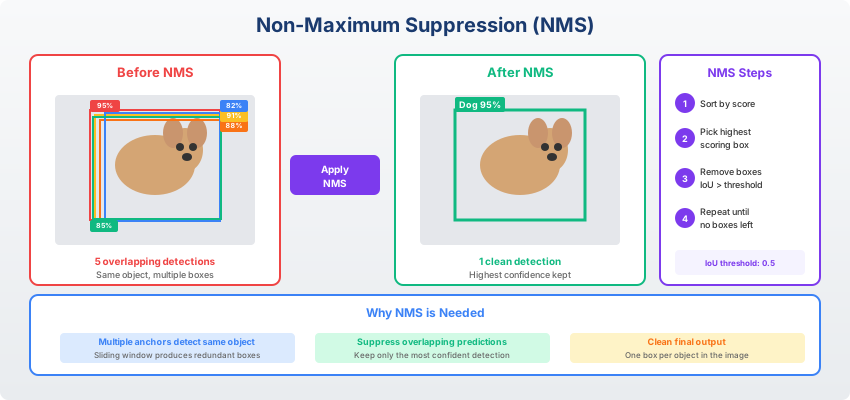
NMS: Remove duplicate detections.
- Sort boxes by confidence
- Keep highest confidence box
- Remove boxes with IoU > threshold
- Repeat for remaining boxes
Mean Average Precision
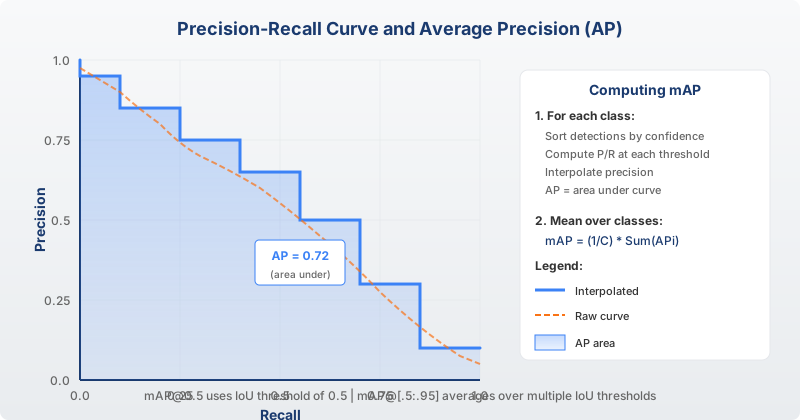
Average of Average Precision (AP) across all classes.
AP = Area under Precision-Recall curve.
Semantic Segmentation
Pixel-level classification
Segmentation Types
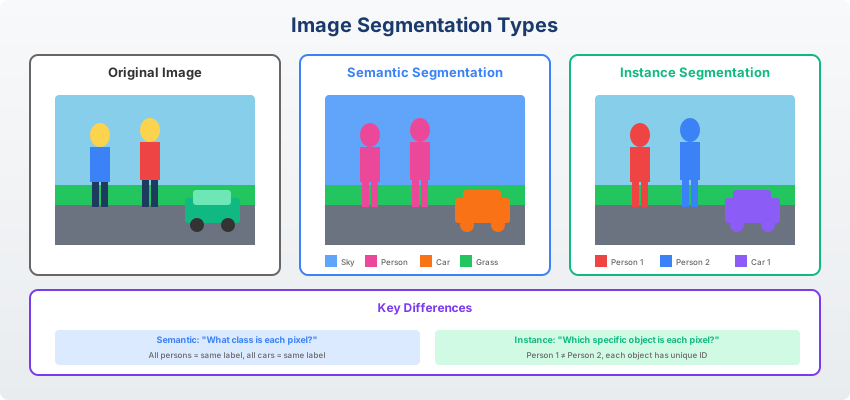
Classify every pixel
No instance distinction
Separate each object
Distinguishes individuals
Knowledge Check
Think About It
What is the difference between semantic and instance segmentation?
Click the blurred area to reveal the answer
U-Net Architecture
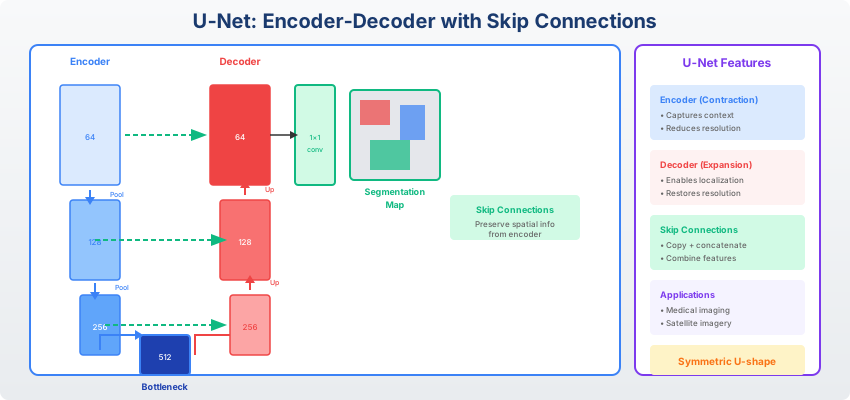
U-Net: Encoder-decoder with skip connections.
- Encoder: Downsample, extract features
- Decoder: Upsample, recover spatial detail
- Skip connections: Preserve fine details
Segmentation Example
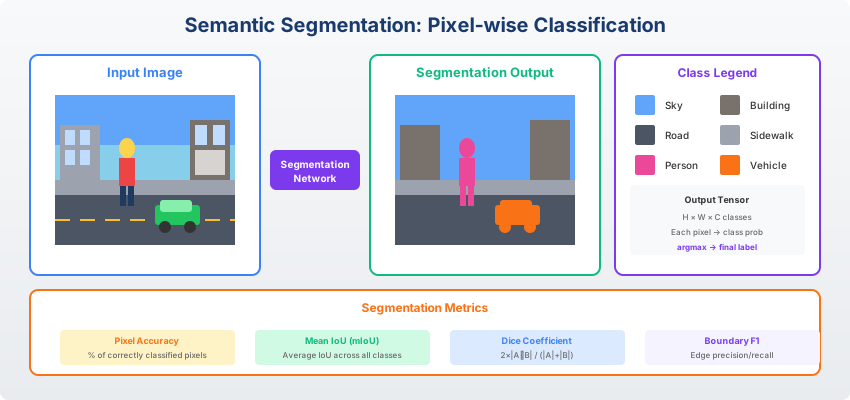
Input image and pixel-wise segmentation output
Implementation
import torch
import torchvision.models as models

# Transfer learning with pretrained ResNet
model = models.resnet18(pretrained=True)

# Freeze feature extractor
for param in model.parameters():
    param.requires_grad = False

# Replace classifier for new task
model.fc = torch.nn.Linear(512, num_classes)

# Object detection with torchvision
from torchvision.models.detection import fasterrcnn_resnet50_fpn
detector = fasterrcnn_resnet50_fpn(pretrained=True)
Summary
Key Takeaways
Key Takeaways
- Classification: Assign single label per image
- Object Detection: YOLO (fast), Faster R-CNN (accurate)
- IoU & NMS: Essential for evaluating and refining detections
- mAP: Standard detection evaluation metric
- Segmentation: Pixel-level classification (U-Net)
- Transfer learning: Leverage pretrained models
Questions?
Thank you for your attention!
Next: Module 11 - Generative Models
End of Module 10
Computer Vision & Deep Learning II
Questions?