Generative Models
CMSC 178IP - Module 11
Noel Jeffrey Pinton
Department of Computer Science
University of the Philippines Cebu
Generative Models
CMSC 178IP - Module 11
Noel Jeffrey Pinton
Department of Computer Science
University of the Philippines Cebu
Learning Objectives
By the end of this module, you will be able to:
- Distinguish between generative and discriminative models
- Understand autoencoder and VAE architectures
- Explain GAN architecture and training dynamics
- Implement image-to-image translation
- Apply style transfer techniques
Introduction to Generative Models
Creating new data from learned distributions
Generative vs Discriminative
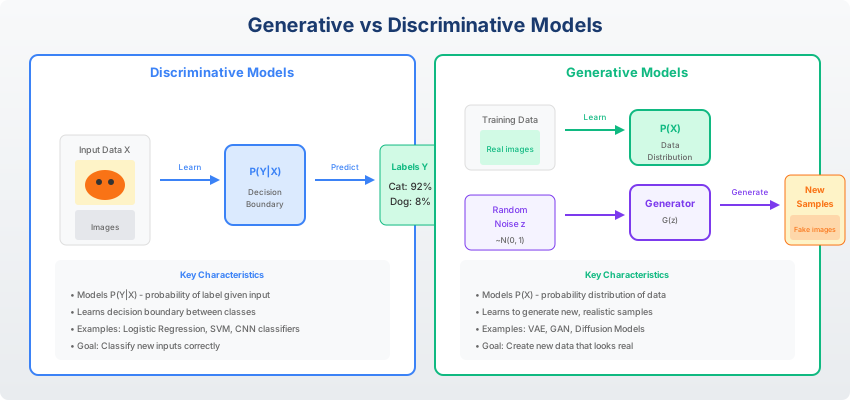
Learn P(y|x)
Classification, regression
Learn P(x) or P(x|y)
Sample new data
Latent Space Concept
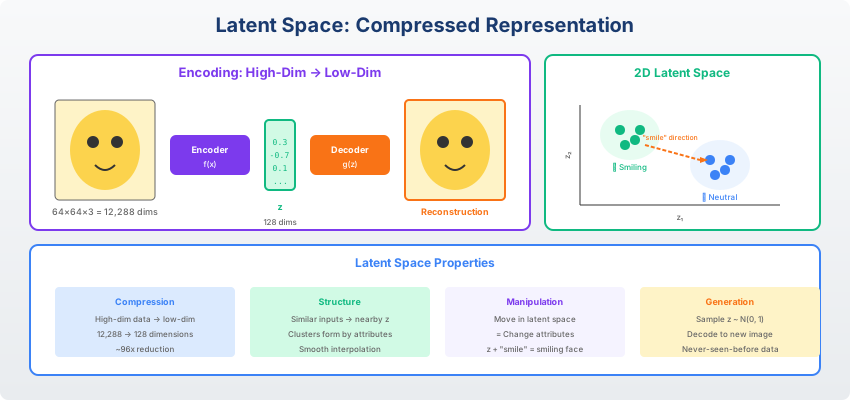
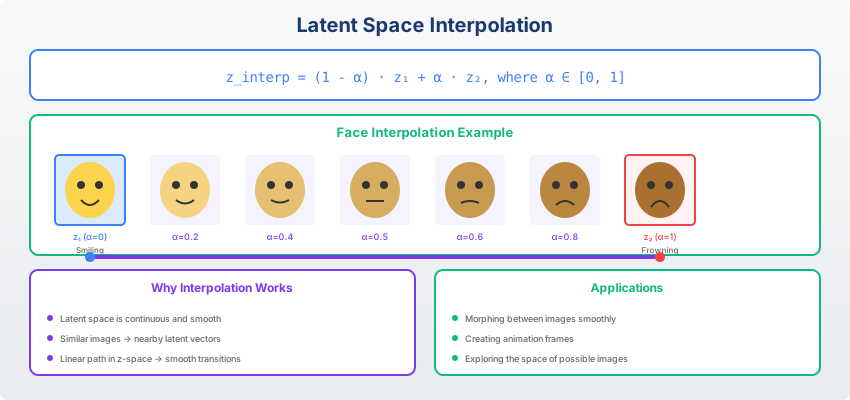
Latent Space: Compressed representation where similar items are close together. Meaningful directions in latent space correspond to semantic attributes.
Knowledge Check
Think About It
Why is the latent space important in generative models?
Click the blurred area to reveal the answer
Autoencoders
Learning compressed representations
Autoencoder Architecture
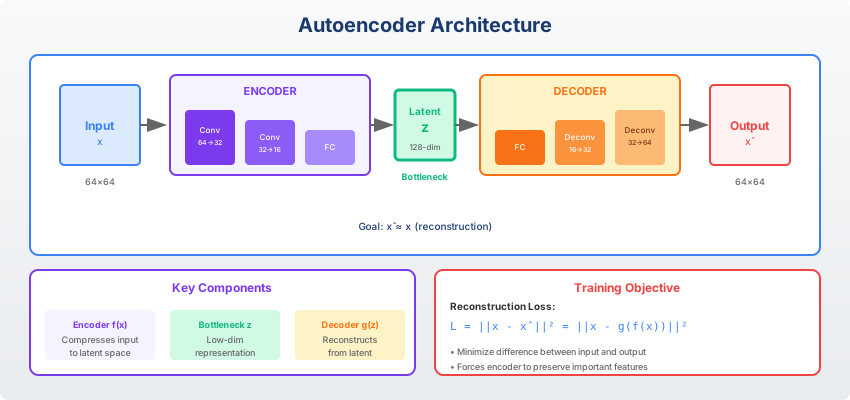
Autoencoder: Learn identity function through bottleneck.
- Encoder: Compress input to latent code
- Decoder: Reconstruct from latent code
- Loss: Reconstruction error (MSE)
Variational Autoencoders
Probabilistic latent representations
VAE Architecture
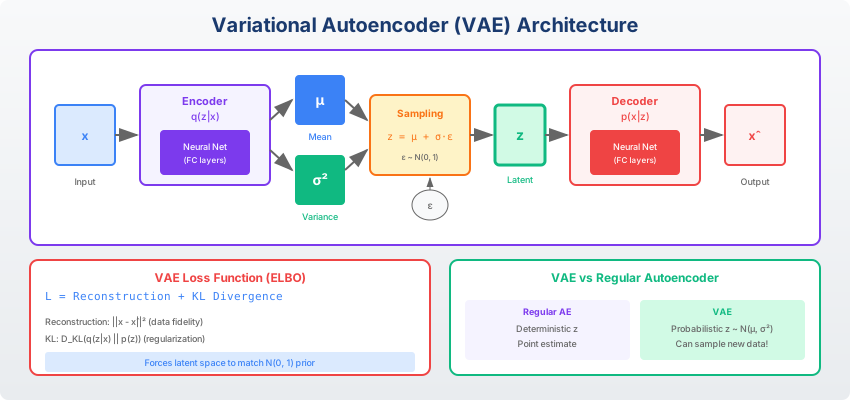
Enables generation by sampling from latent distribution.
VAE Encoder
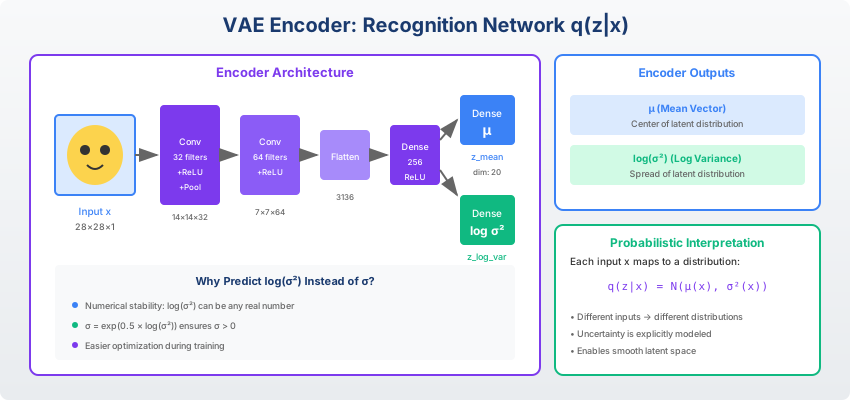
Encoder outputs parameters of latent distribution:
$$q(z|x) = \mathcal{N}(\mu(x), \sigma(x)^2)$$
VAE Sampling (Reparameterization)
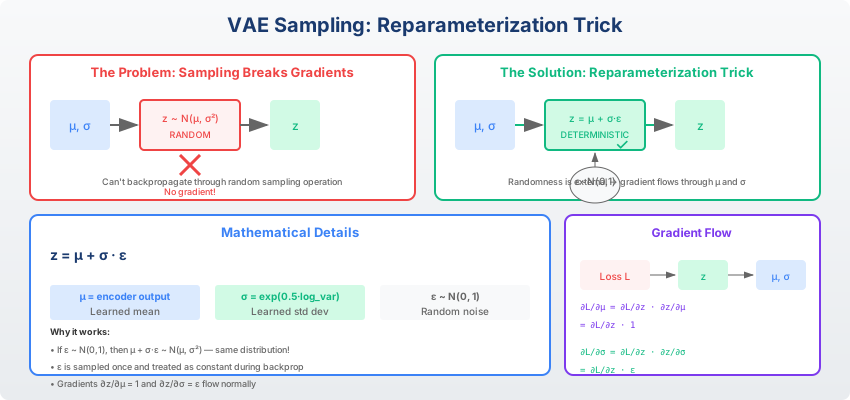
Reparameterization Trick:
$$z = \mu + \sigma \cdot \epsilon, \quad \epsilon \sim \mathcal{N}(0, 1)$$
Enables backpropagation through sampling operation.
Knowledge Check
Think About It
Why is the reparameterization trick necessary in VAEs?
Click the blurred area to reveal the answer
VAE Decoder
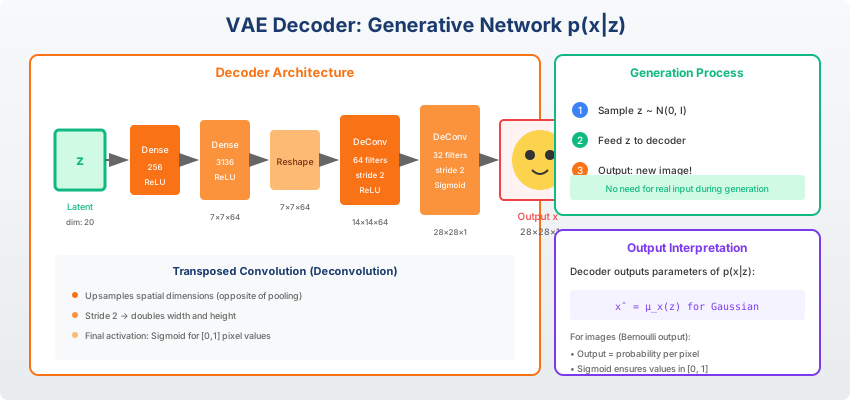
GANs
Generative Adversarial Networks
GAN Architecture
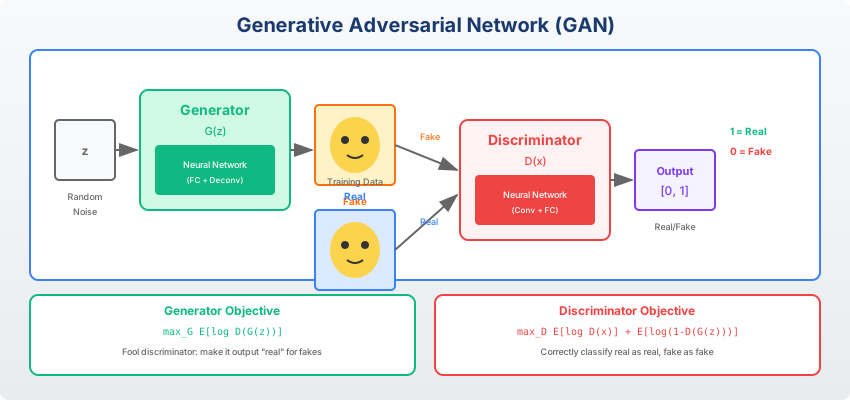
GAN: Two networks in competition.
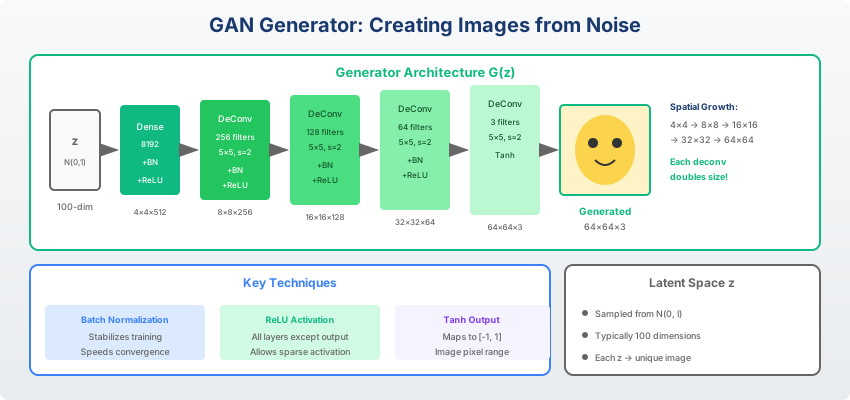
- Generator: Creates fake images from noise
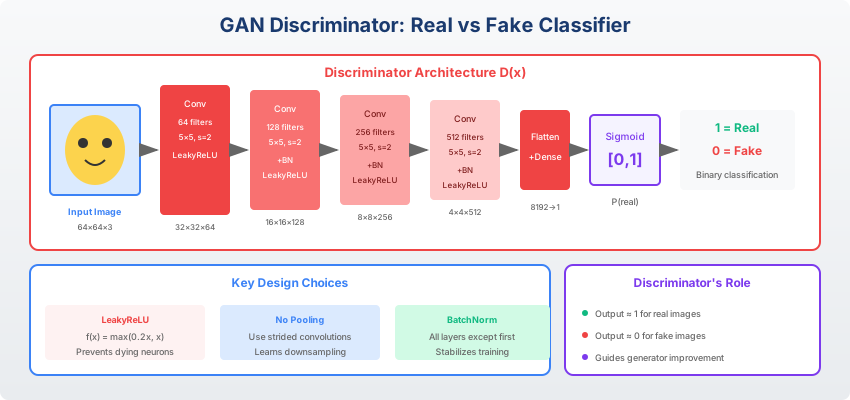
- Discriminator: Distinguishes real from fake
GAN Generator
GAN Discriminator
GAN Game Theory
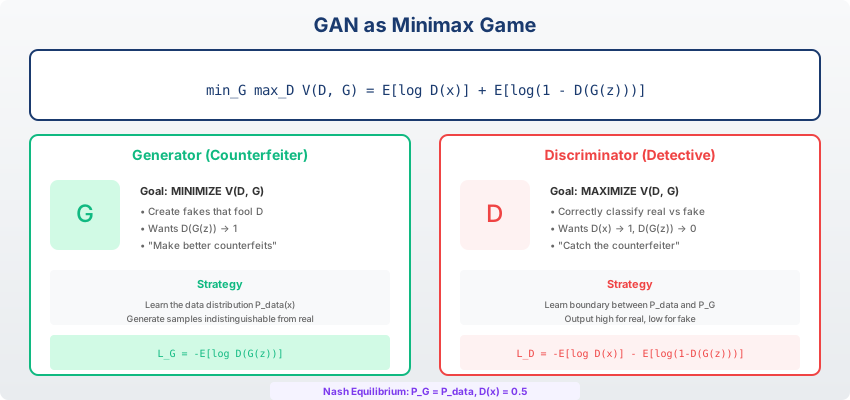
Minimax Game:
$$\min_G \max_D \mathbb{E}[\log D(x)] + \mathbb{E}[\log(1 - D(G(z)))]$$
G minimizes, D maximizes. Nash equilibrium when D can't distinguish.
GAN Training Dynamics
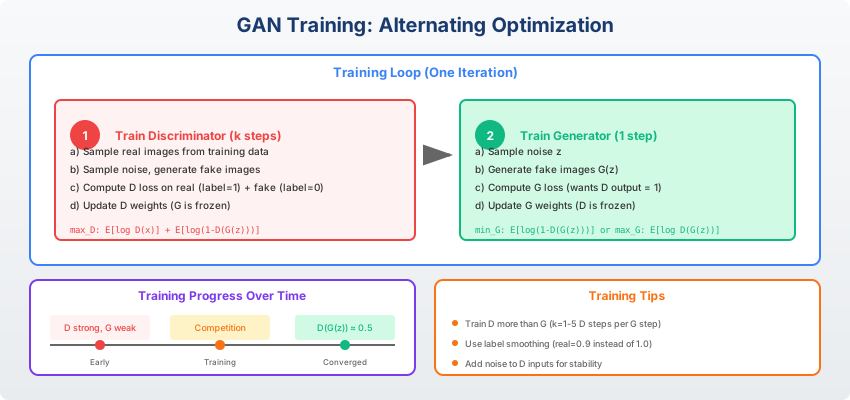
- Train D on real + fake (labeled)
- Train G to fool D
- Repeat
Mode Collapse
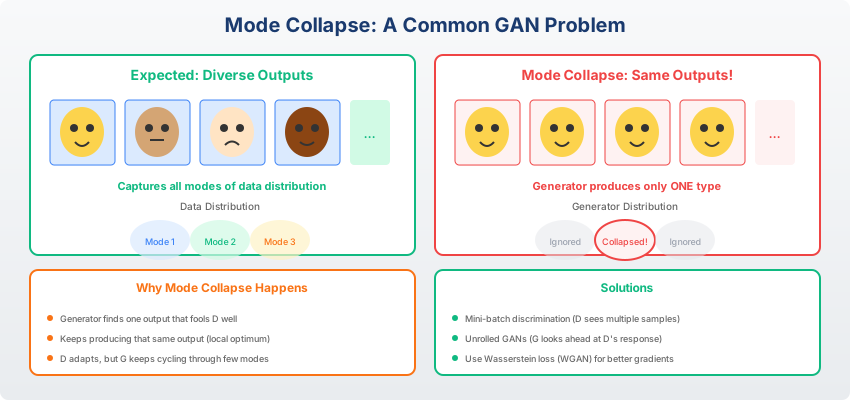
Mode Collapse: Generator produces limited variety. Only generates samples that easily fool discriminator.
Solutions: Wasserstein loss, spectral normalization, progressive training.
Knowledge Check
Think About It
What is mode collapse and why is it problematic?
Click the blurred area to reveal the answer
Training Tips
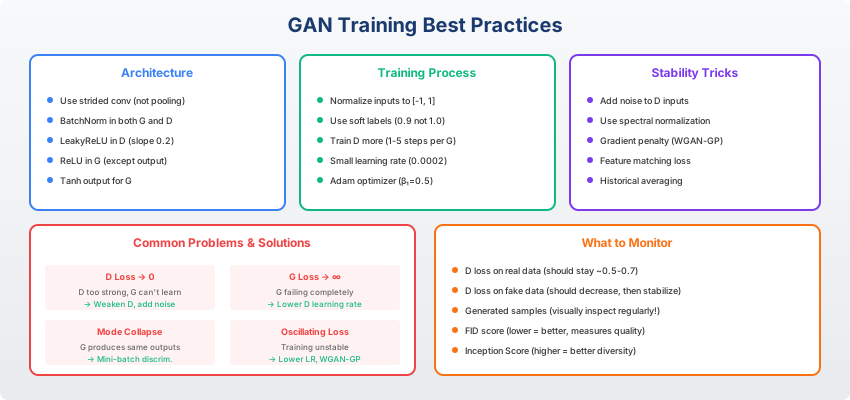
- Use batch normalization
- Leaky ReLU in discriminator
- Adam optimizer (low learning rate)
- Label smoothing
- Balance G and D training
VAE vs GAN
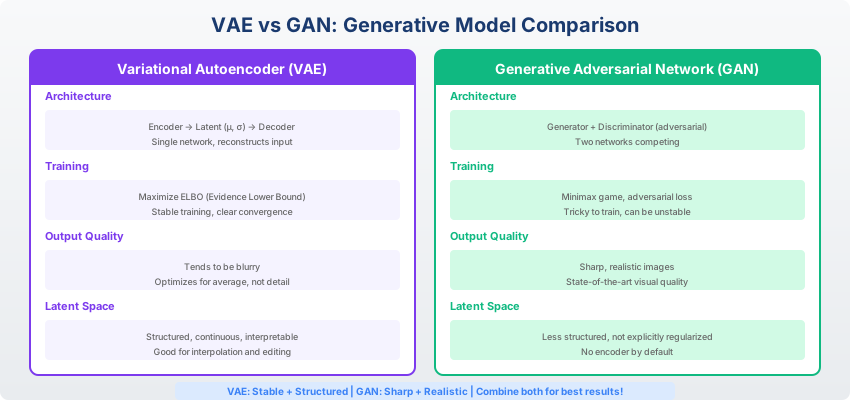
Stable training
Blurry outputs
Explicit density
Harder to train
Sharp outputs
Implicit density
Applications
Real-world generative applications
Generation Examples
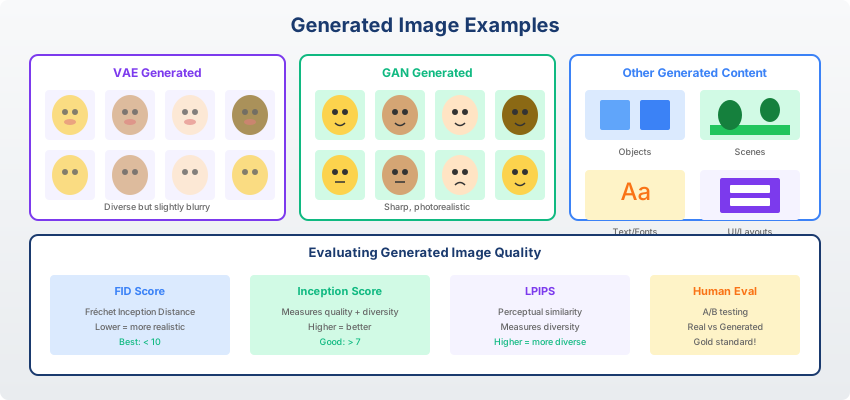
Faces, art, objects generated by modern GANs
Latent Interpolation
Conditional Generation
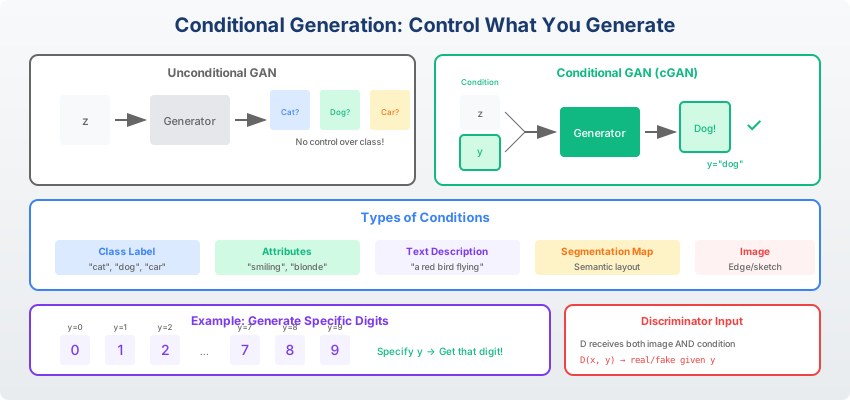
Conditional GAN (cGAN): Control generation with class labels or other conditions. Generate specific types of images on demand.
Image-to-Image Translation
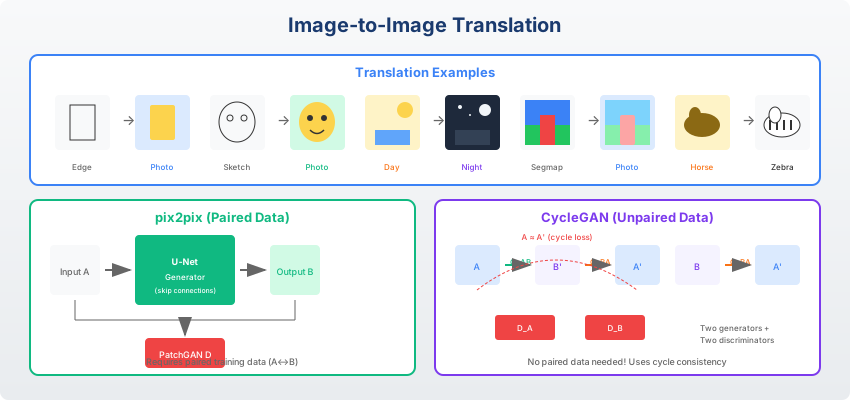
Sketch → Photo
Day → Night
Horse → Zebra
Satellite → Map
Style Transfer
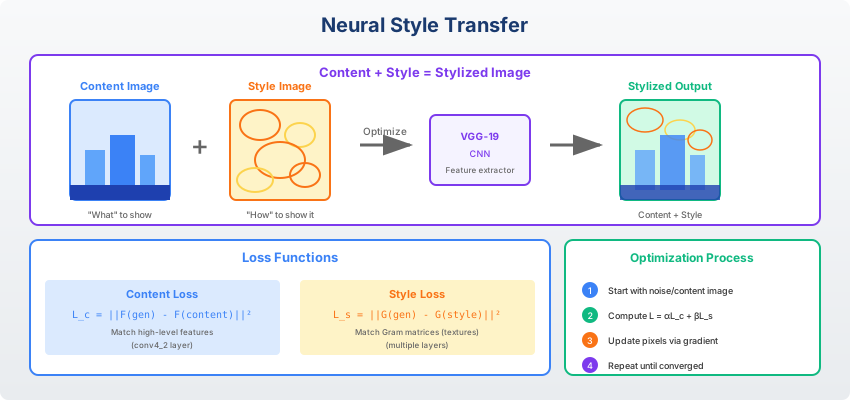
Neural Style Transfer: Apply artistic style of one image to content of another.
Minimize: Content loss + Style loss (Gram matrices)
Applications Overview
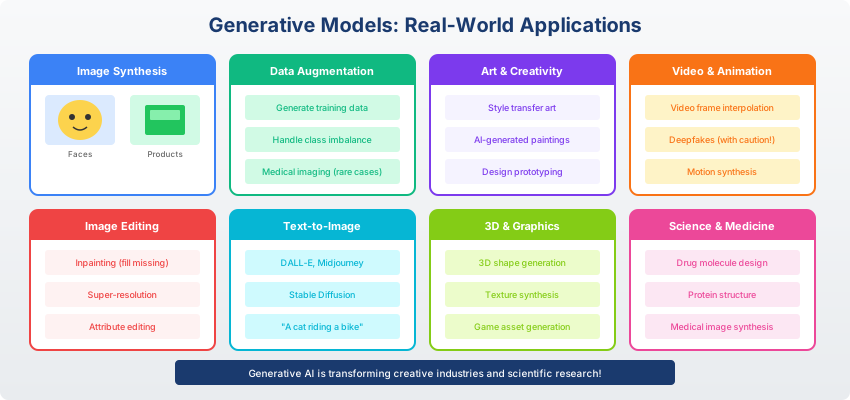
Generative models: art, entertainment, data augmentation, super-resolution
Implementation
import torch
import torch.nn as nn

class Generator(nn.Module):
    def __init__(self, latent_dim=100):
        super().__init__()
        self.model = nn.Sequential(
            nn.Linear(latent_dim, 256),
            nn.LeakyReLU(0.2),
            nn.Linear(256, 512),
            nn.LeakyReLU(0.2),
            nn.Linear(512, 784),
            nn.Tanh()
        )

    def forward(self, z):
        return self.model(z).view(-1, 1, 28, 28)

# Generate images
z = torch.randn(16, 100)
fake_images = generator(z)
Summary
Key Takeaways
Key Takeaways
- Autoencoders: Learn compressed representations via reconstruction
- VAE: Probabilistic latent space enables generation
- GAN: Generator vs discriminator adversarial training
- Mode collapse: Major GAN training challenge
- Applications: Image generation, translation, style transfer
- Future: Diffusion models, large-scale generation
Course Complete!
Congratulations!
You've completed all modules of CMSC 178IP - Digital Image Processing
Good luck with your final projects!
End of Module 11
Generative Models
Questions?